Introduction: Learning Programming Is No Longer Slow and Frustrating
For years, students believed programming had to be difficult.
Confusing syntax.
Endless debugging.
Hours stuck on simple mistakes.
But in 2026, that’s no longer true.
Artificial intelligence has changed how students learn coding. Instead of struggling alone, you can now get instant explanations, real-time debugging help, and structured learning plans.
If you’re wondering how to use AI to learn programming effectively, the answer is not about replacing effort — it’s about improving your learning strategy. Students who understand how to use AI to learn programming the right way build stronger foundations and progress much faster.
If you want to know how to use AI to learn programming effectively, this guide will show you the smart way to do it — without becoming dependent.
👉 If you’re entirely new to programming, start with this Python basics beginner guide → Python basics beginner guide
👉 For official Python tutorials and syntax reference → official Python tutorials and syntax reference
Why Learning How to Use AI to Learn Programming Changes Everything
Modern AI tools like ChatGPT, GitHub Copilot, and Gemini Code Assist act as:
- On-demand tutors
- Code reviewers
- Debugging assistants
- Practice generators
- Concept explainers
The biggest advantage?
They shorten the feedback loop.
Programming improves through trial, error, and correction. AI speeds up that correction cycle dramatically.
That’s why students who learn coding with AI often progress faster.

1️⃣ Use AI to Understand Programming Concepts Faster
Many beginners quit because concepts like loops, functions, and algorithms feel overwhelming.
Here’s how to use AI to learn programming concepts clearly:
Ask it to:
- Explain in beginner language
- Use analogies
- Break concepts into steps
- Compare similar ideas
Example prompt:
“Explain Python loops like I’m 12 years old.”
Instead of reading five tutorials, you get one clear explanation tailored to your level.
That builds strong foundations — and foundations matter more than speed.
👉 To stay on track, use this structured 90-day Python learning guide.
👉 To see how AI coding assistants specifically help beginners with real examples → how AI coding assistants help beginners with real examples
2️⃣ Practice Coding With an AI Programming Tutor
The fastest way to improve is practice — but practice without feedback is slow.
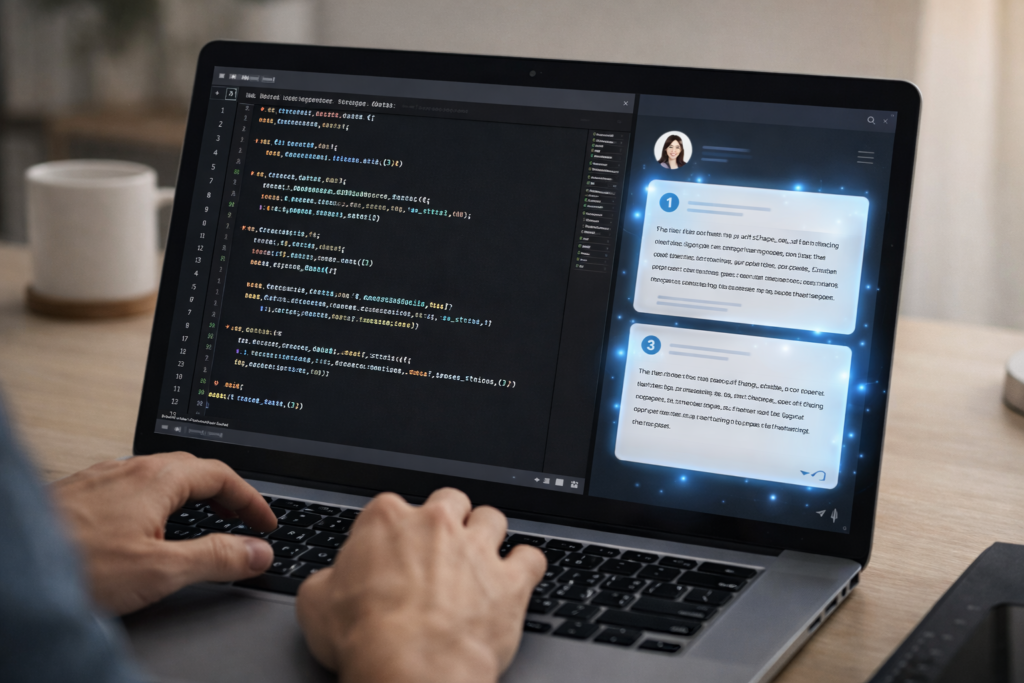
AI becomes your personal coding tutor by:
- Reviewing your code
- Highlighting logic mistakes
- Explaining error messages
- Suggesting cleaner solutions
Smart method:
Paste your code and ask:
“Why is this not working? Explain the logic mistake instead of just fixing it.”
This turns AI into a learning partner, not a shortcut.
3️⃣ Debug Smarter (Without Cheating)
Debugging is where most students feel frustrated.
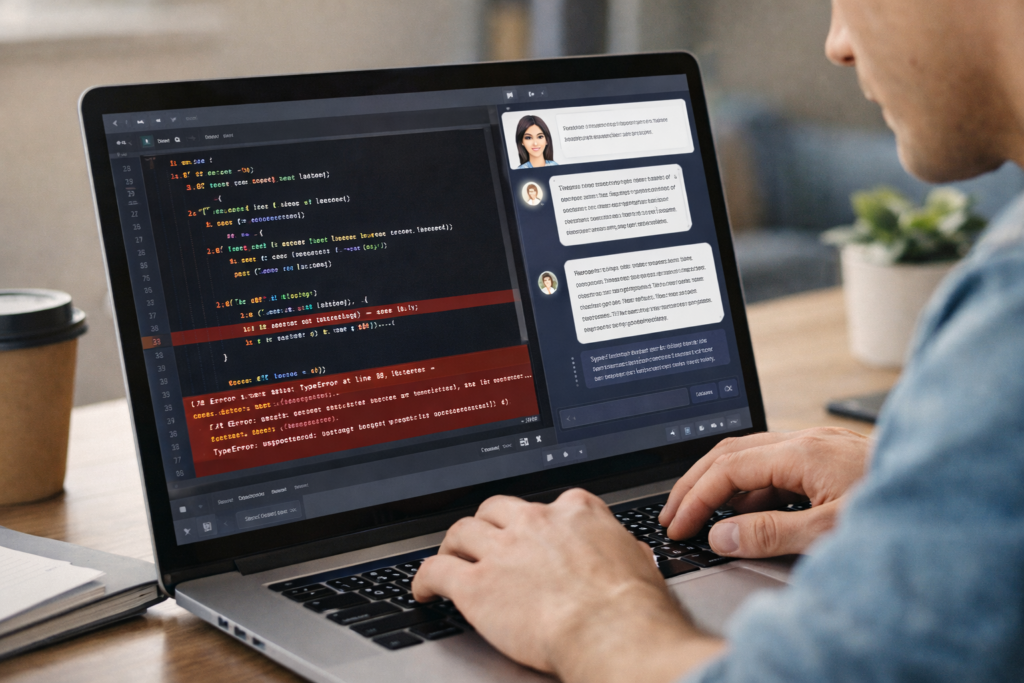
Here’s the right way to use AI for debugging:
Step-by-step workflow:
- Try solving the error yourself
- Paste your code
- Share the exact error message
- Ask AI to explain the problem
- Fix it manually
- Ask AI to review your fix
This method builds real problem-solving skills.
If AI solves everything instantly, you lose growth.
Use it as guidance — not replacement.
4️⃣ Learn by Building Real Projects With AI
If you truly want to know how to use AI to learn programming effectively, start building projects early.
AI can guide you through:
- Calculator apps
- To-do list apps
- Simple games
- Weather apps
- Basic websites
Smart prompt:
“Guide me step by step but don’t give the full solution at once.”
Active learning beats passive copying.
5️⃣ Use AI to Explore Real Programming Libraries
Moving from basics to real-world tools feels intimidating.
Libraries like:
- Pandas
- Flask
can overwhelm beginners.
AI makes them accessible.
Instead of reading complex documentation, ask:
“Explain Pandas DataFrame with a simple real-life example.”
Or:
“What is the difference between Python lists and NumPy arrays?”
This reduces fear and builds confidence quickly.
6️⃣ Create a Personalized AI Learning Plan
Every student learns at a different pace.
AI can generate:
- 30-day Python learning plans
- Weekly coding schedules
- Beginner-to-advanced AI roadmaps
- Project-based learning paths
Random learning creates confusion.
Structured learning creates progress.
7️⃣ Prepare for Exams and Interviews With AI
AI can simulate:
- Coding interview questions
- Algorithm challenges
- Practice quizzes
- Flashcards
- Concept summaries
Instead of guessing what to study, you prepare strategically.
That’s how students gain confidence.
A Real Example: How a Beginner Can Use AI to Learn Programming Step by Step
Understanding theory is good.
But let’s look at a realistic scenario.
Imagine a beginner named Ali who just started learning Python.
He wants to understand loops but feels confused.
Here’s how he uses AI the smart way:
Step 1: Ask for Simple Explanation
Ali types:
“Explain Python for loops with a simple real-life example.”
AI explains using examples like counting items in a shopping list.
Now the concept makes sense.
Step 2: Try Writing Code Himself
Ali writes:
for i in range(5):
print(i)
He gets an indentation error.
Instead of panicking, he asks:
“Why am I getting an indentation error in this loop?”
AI explains indentation clearly.
Step 3: Fix It Manually
He corrects the indentation and runs the code again.
Now it works.
He didn’t copy a solution.
He understood it.
Step 4: Apply the Concept in a Mini Project
He asks:
“Give me a small beginner project that uses loops but don’t give full solution.”
AI suggests a number guessing game.
Now he practices actively.
This is how to use AI to learn programming effectively:
- Learn
- Try
- Fail
- Debug
- Apply
That cycle builds real skill.
How to Write Better Prompts When Learning Programming With AI
Most students fail not because of AI — but because of bad prompts.
If you want to master how to use AI to learn programming, you must learn how to ask questions properly.
Here’s the framework:
🎯 The CLEAR Prompt Formula
C — Context
Explain what you’re learning.
L — Level
Mention you’re a beginner or intermediate.
E — Error (if any)
Paste exact error message.
A — Attempt
Show what you tried.
R — Request Explanation
Ask for explanation, not just solution.
❌ Weak Prompt:
“Fix this.”
✅ Strong Prompt:
“I’m a beginner learning Python loops. I tried printing numbers from 1 to 10, but I get an indentation error. Here is my code. Can you explain what I did wrong and how indentation works?”
Better prompts = better learning.
AI responds based on clarity.
Long-Term Strategy: Using AI to Become an Independent Programmer
Here’s something most blogs don’t tell students:
AI should make you independent — not dependent.
If you always rely on AI, your thinking weakens.
If you use AI strategically, your thinking sharpens.
Here’s a weekly learning system you can follow:
Weekly Smart Learning System
🗓 Day 1–2: Learn Concept With AI
- Ask for simple explanations
- Request small examples
- Take handwritten notes
🗓 Day 3–4: Practice Without AI
- Solve problems manually
- Use documentation
- Debug independently
🗓 Day 5: Use AI for Code Review
- Paste your solutions
- Ask for improvements
- Learn better structure
🗓 Day 6: Build Mini Project
- Apply everything
- Ask AI for guidance only when stuck
🗓 Day 7: Reflection
Ask AI:
“Review what I learned this week and suggest improvement areas.”
This structured approach ensures AI supports growth instead of replacing thinking.
Students who understand how to use AI to learn programming long-term will develop stronger logic, faster debugging skills, and better project confidence.
Popular Python Libraries Students Explore
1️⃣ Pandas
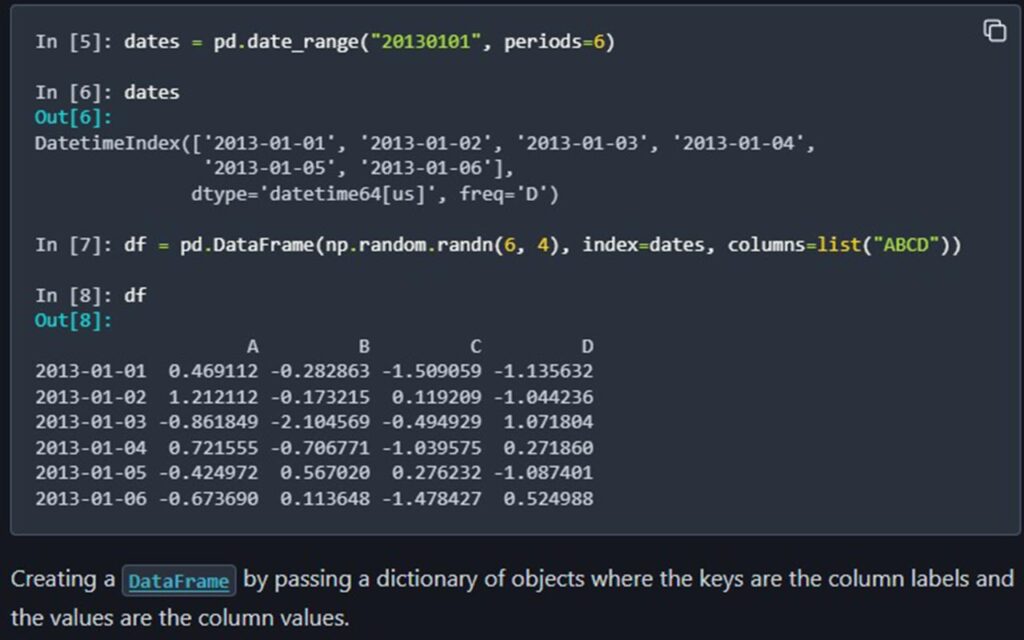
Used for:
- Data analysis
- CSV file processing
- Working with tables
AI Prompt Example:
“Explain Pandas DataFrame like I’m a beginner.”
2️⃣ Flask
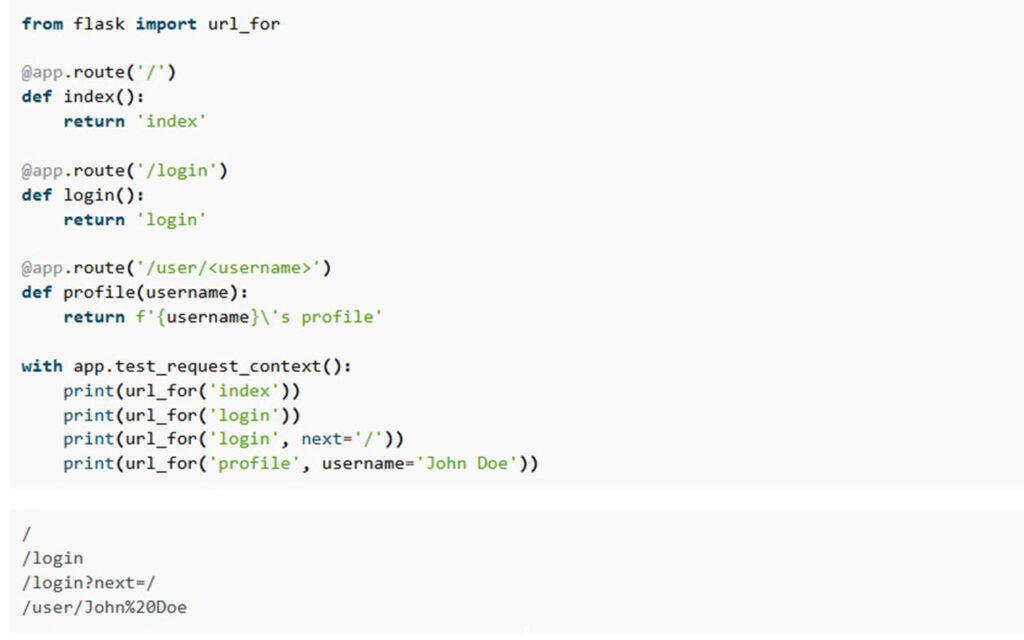
Used for:
- Building websites
- Creating APIs
- Backend development
Prompt:
“Help me build a simple Flask app step by step.”
3️⃣ NumPy
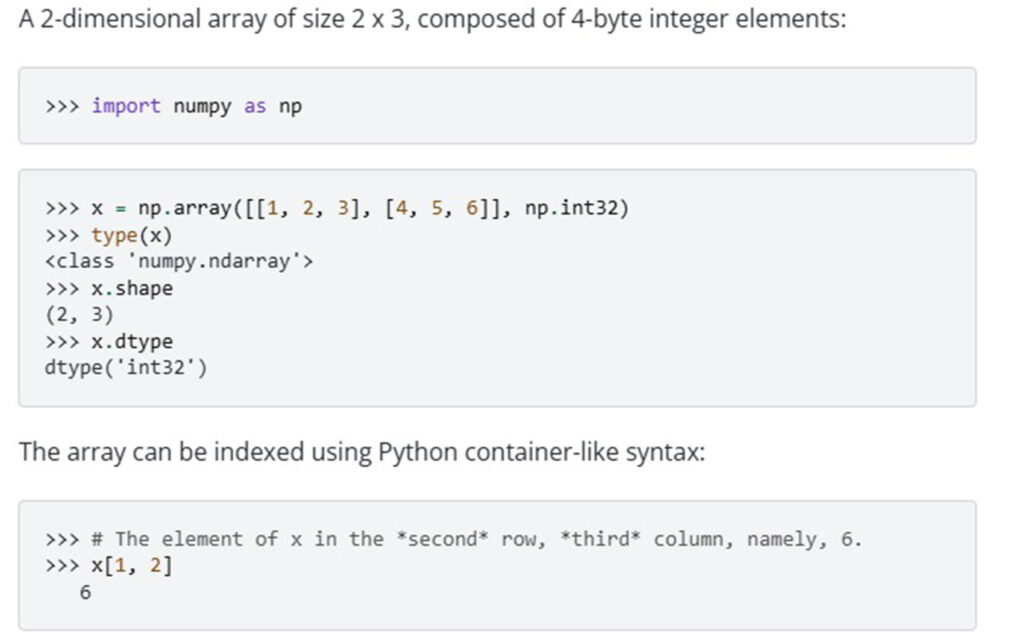
Used for:
- Mathematical operations
- Scientific computing
- AI foundations
Prompt:
“What is the difference between Python lists and NumPy arrays?”
6. Create Personalized Learning Plans With AI
Every student learns at a different pace.
AI can design custom study roadmaps such as:
• 30-day Python learning plans
• Weekly JavaScript schedules
• AI learning paths from beginner to advanced
This removes confusion and keeps students consistent.
7. Prepare for Exams and Interviews With AI
AI can generate:
✔ Practice quizzes
✔ Coding challenges
✔ Flashcards
✔ Mock interviews
✔ Concept reviews
This turns exam preparation into structured learning instead of stress.
8. Learn Ethically — Don’t Let AI Replace Thinking
AI is powerful — but it should support learning, not replace effort.
Smart AI Usage:
✅ Try solving problems first
✅ Ask AI to explain solutions
✅ Understand every answer
✅ Practice manually
Avoid:
❌ Copy-pasting code blindly
❌ Skipping fundamentals
❌ Letting AI do everything
Students who use AI wisely become strong programmers — not dependent ones.
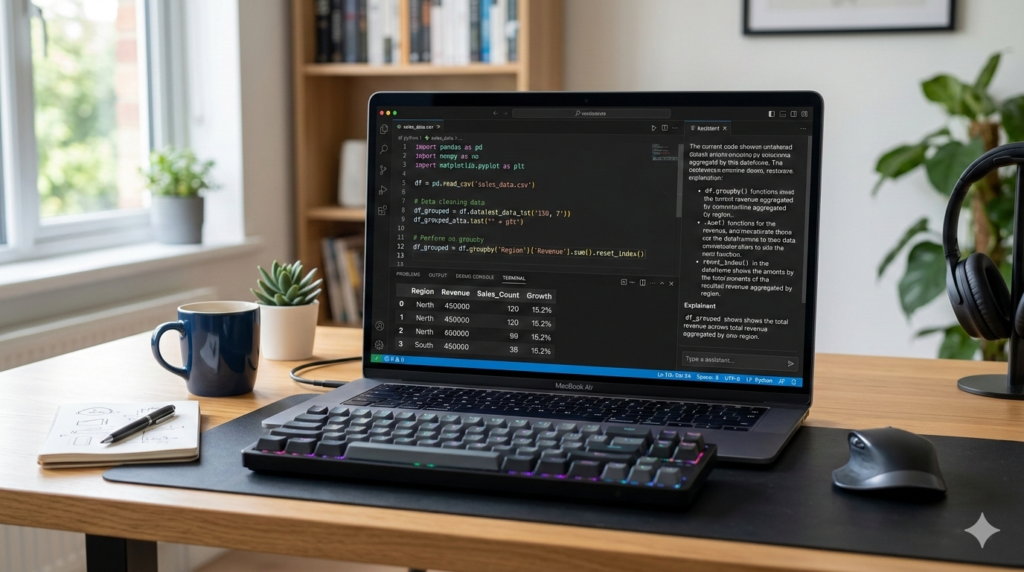
Why AI Makes Learning Programming Smarter
When used properly, AI helps students:
• Learn concepts faster
• Practice efficiently
• Debug confidently
• Build projects early
• Stay motivated
This combination accelerates skill development like never before.
👉 For a current comparison of the best tools students can use right now (2026 edition) → best tools students can use right now
👉 According to Education Week, blended learning with technology improves outcomes → research on blended learning with technology
🚨 Common Mistakes When Using AI to Learn Programming
Even though AI helps, students misuse it.
Avoid these:
❌ Copy-pasting full projects
❌ Skipping manual practice
❌ Asking vague questions
❌ Jumping to advanced frameworks too early
❌ Letting AI solve everything
AI should reduce friction — not remove effort.
If you don’t think, you don’t improve.
The Smart Strategy for Using AI to Learn Programming
Strong students:
✅ Try solving problems first
✅ Ask AI to explain logic
✅ Rewrite code manually
✅ Practice without AI sometimes
✅ Use AI to structure learning
Weak students:
❌ Depend on auto-generated code
❌ Skip understanding
❌ Avoid critical thinking
The difference between average and advanced developers will increasingly depend on how they use AI.
📊 Comparison: Traditional Learning vs AI-Assisted Learning
Factor Traditional Programming Learning AI-Assisted Programming Learning Speed of Understanding Depends on books & tutorials Instant explanations in simple language Feedback Teacher or peer review (slow) Real-time code review & debugging Personalization Same material for everyone Adjusts to your level Debugging Help Forums & trial-error Step-by-step error explanation Practice Support Static exercises Dynamic challenges & quizzes Project Guidance Limited structure Guided step-by-step project building Motivation Can feel slow & frustrating Faster wins build confidence Risk Slow progress Risk of over-dependence if misused AI doesn’t replace learning.
🚀 Keep Learning With Python & AI
🔹 Learn Python fundamentals → Python Basics Explained Simply
🔹 See how AI tools help beginners → How AI Coding Assistants Help Beginners Learn Python Faster
🔹 Follow a complete learning system → How to Build a Complete AI-Powered Python Learning System
❓ FAQ: Using AI to Learn Programming
1. Can beginners really use AI to learn programming?
Yes — beginners benefit the most. AI explains complex ideas like loops, functions, and algorithms in simple language. The key is to ask clear, beginner-focused prompts.
2. Will using AI make students dependent?
Only if used incorrectly.
If students copy-paste without understanding, dependency grows.
If they attempt problems first and use AI for guidance, it strengthens learning.
3. Is using AI considered cheating?
It depends on how it’s used.
Using AI to understand concepts or debug is learning.
Submitting AI-generated assignments without understanding is unethical.
AI should be treated like a tutor — not a replacement for thinking.
4. What is the best way to ask AI coding questions?
Be specific. Instead of saying:
“Fix this.”
Say:
“Why is this loop not stopping? Explain the logic mistake.”
Specific prompts = better learning outcomes.
5. Which AI tools are best for programming students?
Students commonly use:
ChatGPT
GitHub Copilot
Gemini Code Assist
Each tool has strengths, but the strategy matters more than the tool.
6. Should students stop using traditional resources?
No.
The smartest approach is blended learning:
Official documentation
Structured courses
Practice projects
AI assistance
AI enhances traditional learning — it doesn’t replace it.
A Practical Daily Routine: How to Use AI to Learn Programming Consistently
Many students read about AI tools but never build a structured habit.
Understanding how to use AI to learn programming is not just about asking smart questions — it’s about building a daily system.
Here is a simple 60–90 minute learning structure you can follow.
Step 1: 20 Minutes — Concept Clarity
Start by asking AI to explain one focused concept.
Examples:
- “Explain Python functions with a real-life analogy.”
- “What is the difference between a list and a dictionary?”
Take notes manually.
Rewrite the explanation in your own words.
This ensures you truly understand how to use AI to learn programming instead of passively reading responses.
Step 2: 30 Minutes — Manual Practice
Now close the AI window.
Write code yourself:
- Build a small script
- Solve 2–3 small exercises
- Try modifying examples
Struggle a little. That’s where learning happens.
Only after attempting should you reopen AI for review.
Step 3: 20 Minutes — AI Code Review
Paste your solution and ask:
“Review my code and suggest improvements, but explain why.”
This is where you refine logic, structure, and readability.
Over time, this habit teaches you how to use AI to learn programming in a disciplined and strategic way — not a lazy one.
Step 4: Weekly Reflection
At the end of the week, ask:
“Based on what I practiced this week, what weaknesses should I improve?”
This turns AI into a performance coach, not just a helper.
Consistency + structured AI usage = accelerated growth.
Students who follow a system don’t just move faster — they think better.
The Right Way to Use AI to Learn Programming
Understanding how to use AI to learn programming means balancing independence and assistance.
Here’s the smart framework:
- Attempt the problem first
- Use AI for clarification
- Rewrite solutions manually
- Build projects regularly
- Review mistakes weekly
Students who master how to use AI to learn programming don’t just move faster — they think better.
Final Takeaway
Now you understand how to use AI to learn programming without becoming dependent on it.
AI is a multiplier.
It multiplies:
- Effort
- Feedback
- Speed
- Clarity
But it also multiplies bad habits.
Students who use AI wisely today will outpace traditional learners tomorrow.
The difference is not intelligence.
It’s strategy.
Programming doesn’t have to be harder.
With AI, it becomes smarter.